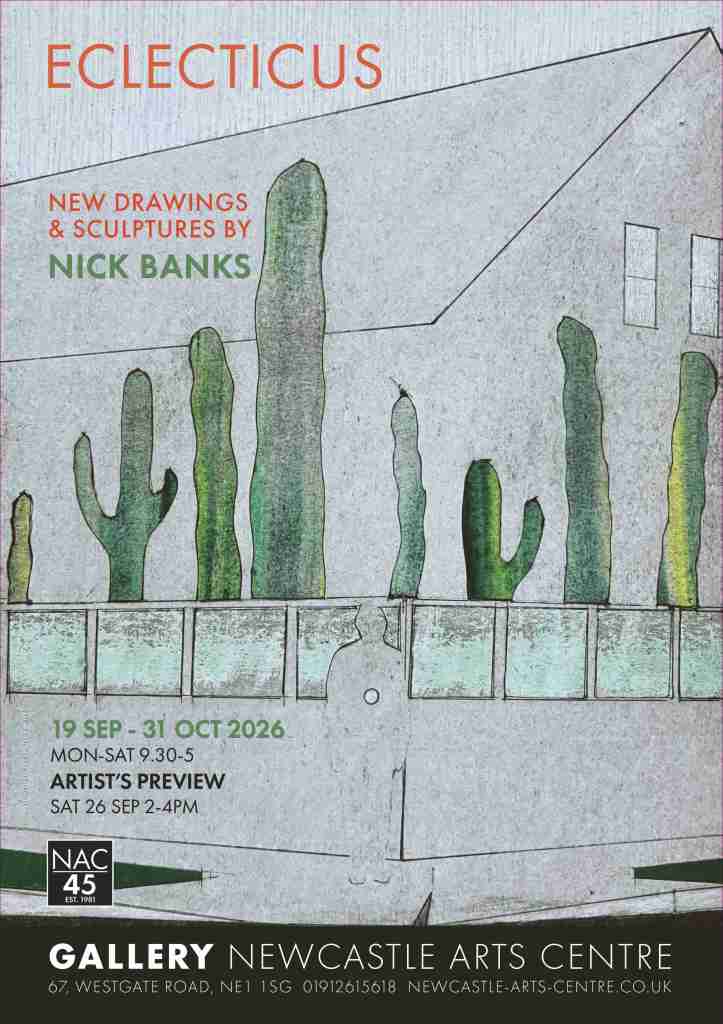
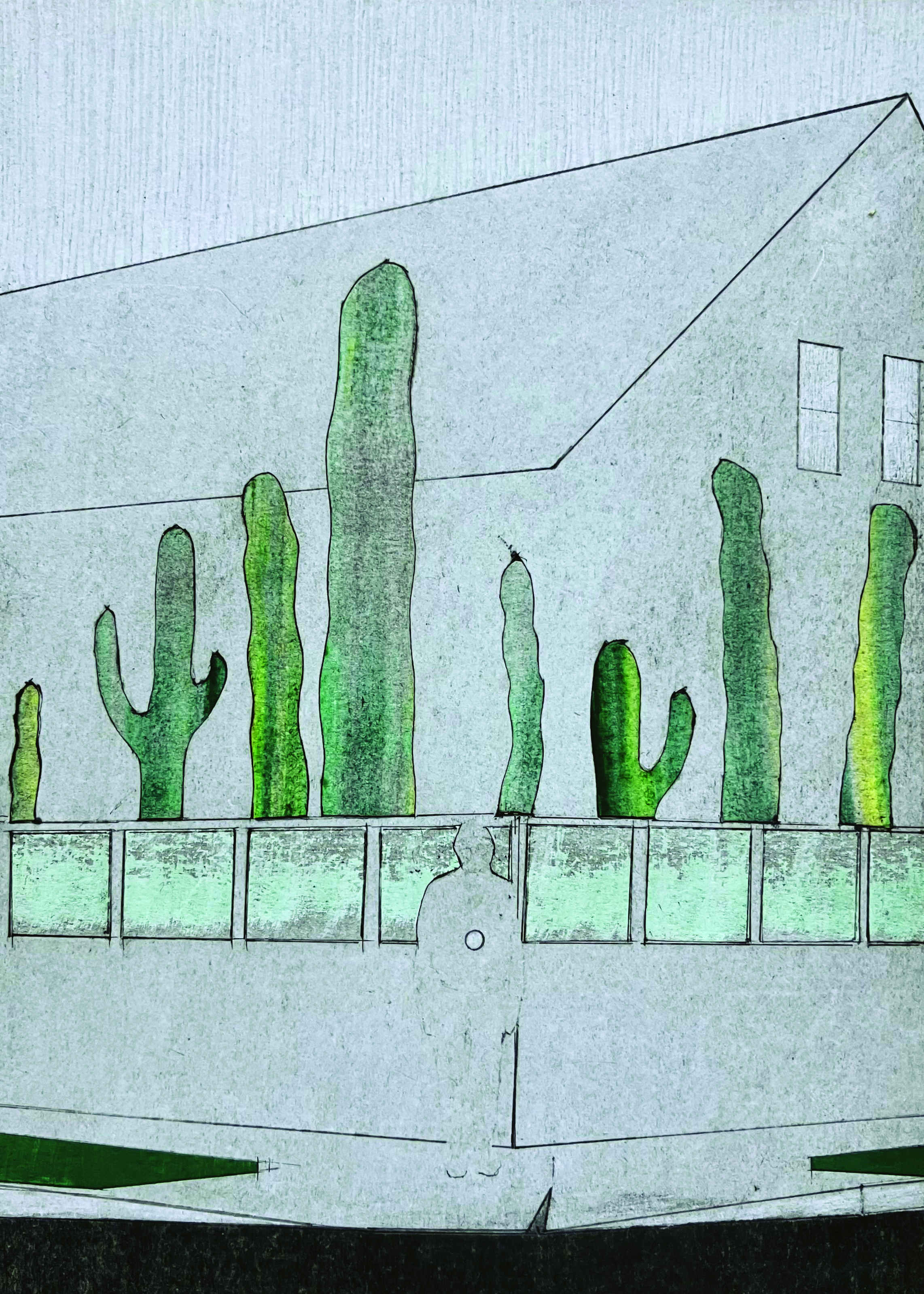
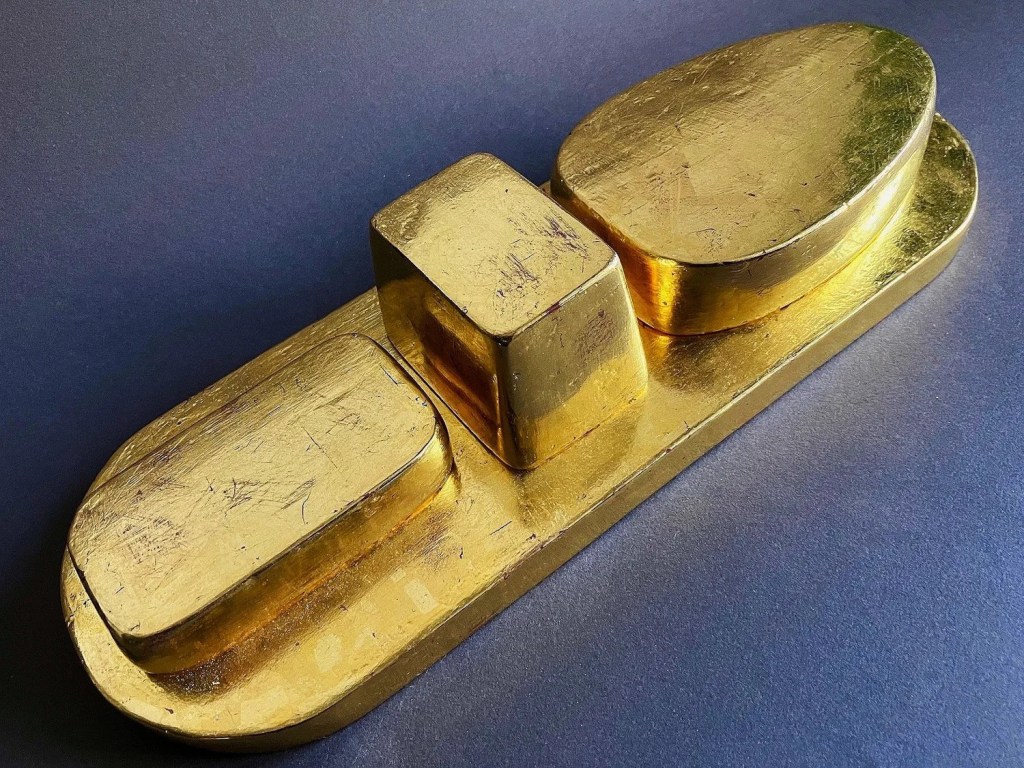
Eclecticus is the latest body of work by Nick Banks. It’s with us at Newcastle Arts Centre until the end of October 2026, in our Gallery & Showcase. The exhibition captures moments, objects, memories, and forms across an eclectic breadth of subject matter. Using both drawing and sculpture, Nick presents this collection as a deviation from theme, developing ideas and imagery that have flowed to him ‘like figures emerging from the mist.’

You can find out more about the exhibition HERE.

In 2025 Nick was a Best In Show Winner in our annual open exhibition, The Northern Summer Exhibition, with his wonderful piece Fading Knight. Following this we got to know Nick and his impressive, ever-growing collection of drawings and sculptures.
Now part of our exhibition programme, we are thrilled to be presenting a comprehensive showcase of his artistic practice. We also wanted to take the oppourtunity to ask him more about his practice, his journey as an artist, and what this latest collection of work means to him.
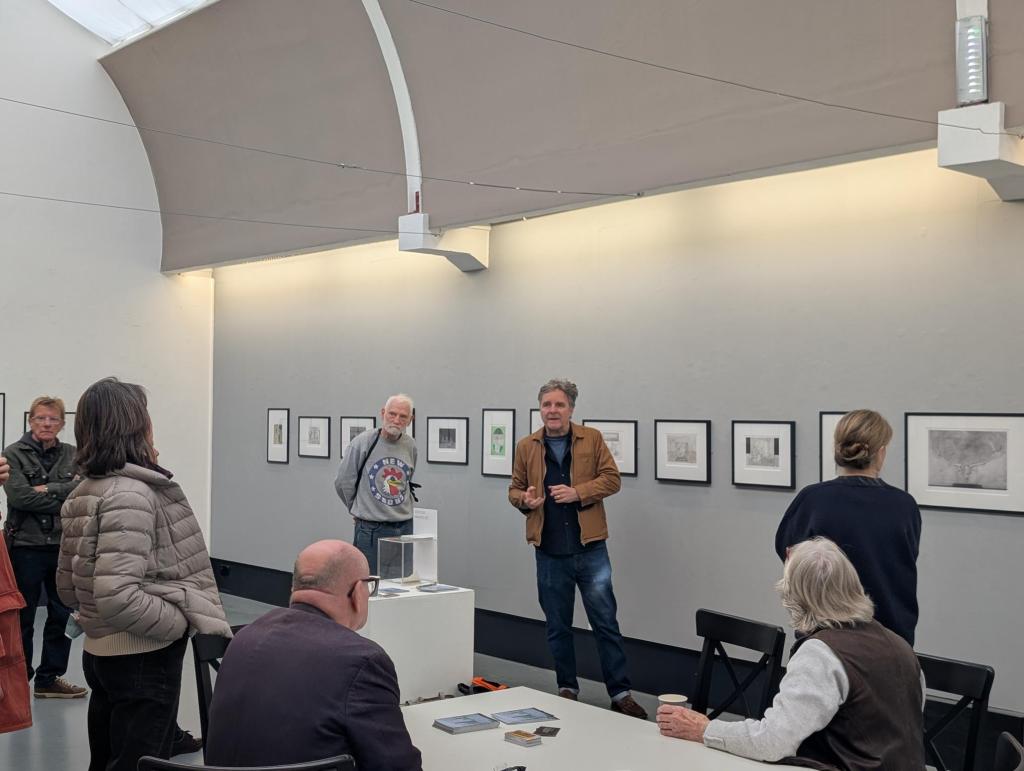
Interview with Nick Banks
How do you decide what will be the subject of a drawing or a sculpture before you start?
Regarding both the drawings and the sculptures, the trigger to pursue a work is: does it interest me enough whilst having the potential for me to do something worthwhile with it? For example, the drawing ‘Fading Knight’ came from seeing an effigy of a knight in Durham Cathedral. Its beauty was how its form had deteriorated through people damaging it over the centuries, by carving their initials and so on into it. I invented an image which alluded to this damage being done in its early years and also the the physical damage inflicted upon a veteran Knight. The sculpture ‘Cannery Row’ came from clearing a food cupboard, checking the use by dates and realising how familiar the contents of the tins were simply by the tins shape. So a piece arrived through just a simple observation which had enough potential to hold my pique. So really the choice of subject can come to me in all sorts of ways. Also of course you only get to see the ‘successes’ in the show. There have been many false starts.
What’s your process of starting one of your drawings? Are there many versions before the final piece?

Usually I have an actual image to work from, knowing that I can take it elsewhere. For example, the drawing ‘The Watchers’ began with a photograph of the Royal Family watching a performance from the royal box. I guess it was taken in the late 1940’s. I liked how attentive they all were and how they were lit from below. There were five of them sitting in a row, when I started working from it, it soon adapted to became three people and I started to think how what I was doing reminded me of the crowd looking over the wall in Manet’s painting ’The Execution of Maximilian’. At that point I wanted to make the characters more sinister and included an exaggerated arm and hand. The one drawing I made several attempts at was ’Solitude’. I knew the image had potential but attempts failed until I simplified it and introduced colour.
Same question for your sculptures – do you have a few versions before you settle on the shape and texture?
The sculptures come together quite quickly, without any sketches or models. In a way, the making dictates its progress and I don’t have a specific outcome image in mind, I just work with the initial germ of an idea which needs to expand.
What do you love about working in pencil?
Pencil of course allows for corrections! Its versatility is ideal for the small scale I enjoy working on. All of the drawings are started using an HB pencil, which when I was at Art School, was regarded as ‘an office pencil, only good for ticking boxes’. When you start out, you want to try out all the materials and mediums available. Gradually you discover what you enjoy working with and what suits your needs. I couldn’t begin a work with willow charcoal for example.
What’s your favourite material to sculpt with and why?
Well sculpture encompasses two things; addition and subtraction. Addition involves modelling and construction in all its forms. Subtraction is of course reduction, principally carving. Of the two processes, I prefer construction as it has more potential regarding the use of diverse materials whilst allowing for greater scope and spontaneity of adaptation.
In terms of a specific material of choice, clay allows for great speed of working, delicacy and revision. That said, for practical reasons, the only piece in the show modelled in clay is ‘Silent Knight’.

Some of your drawings are completely made up images – what’s your process of crafting an image entirely from your imagination?
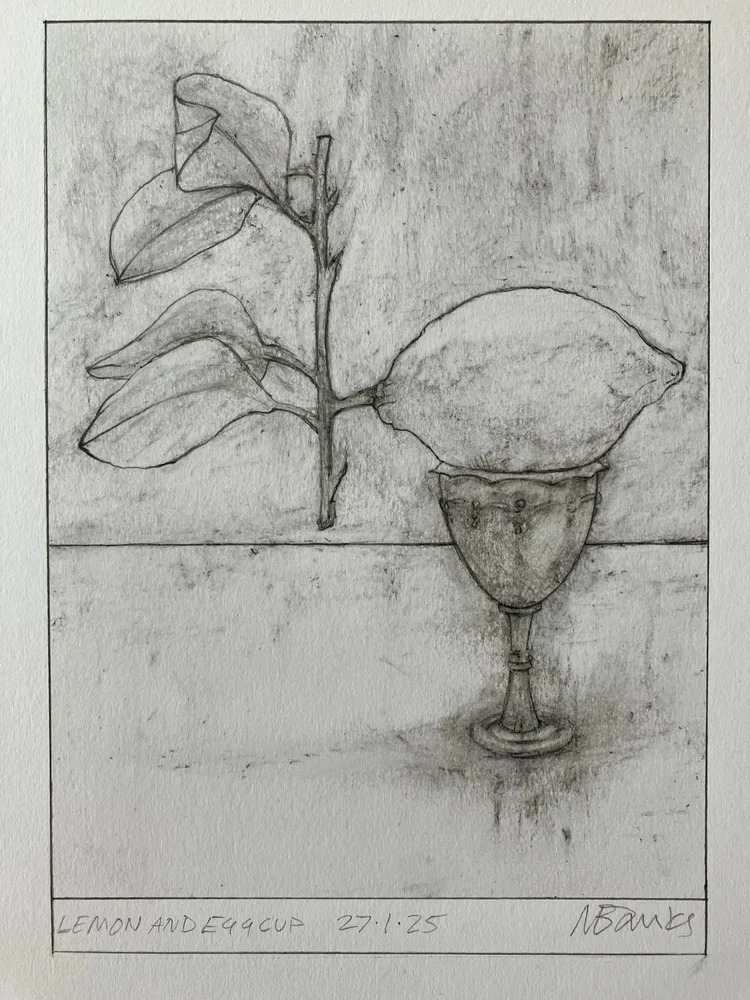
Nothing is preliminary, I feel confident enough to allow a drawing to evolve with just a vague picture in my head; not much beyond aspects such as composition and possible narrative. Obviously initial marks need to be light and tentative, then seeing them begin to get somewhere, bolder lines and tone can be introduced. As with most of the drawings, and it may not be obvious, but many go through very rigorous changes. The drawings ‘Lemon and Eggcup’ and ‘Bastet’ were purely linear, then heavy dark tone was introduced (which didn’t work), then were worked back to their final satisfactory state.
One of your students said that your drawings have a quality of clarity to them, as if they knows when they’re finished – do you know when a piece of work is done? And do you feel a compulsion to keep refining it?
Usually I know when a drawing is resolved because the process slows down to a stop. By that I mean the refining and cleaning up of the piece are the last bits of the action. If not entirely convinced, I come back to it the following day, and sometimes the need for revision is obvious. So I have no qualms about revisiting work if it needs it.
How long have you been practicing both drawing and sculpture? And can you think of a time when your practice hit a turning point?
Well I received excellent instruction in both drawing and sculpture when at Art School, and have pursued both ever since. Less so sculpture because of constraints of space. Since leaving college I have taught drawing and by doing so learnt a lot from students and colleagues as to what drawing can offer. When working full time, it was hard to find a steady rhythm of engagement with my work; a frustration which a lot of artists struggle with. When I chose to give up full time teaching, it freed the opportunity to experiment and explore new ways of working. At this point I was making collages which involved intricate inlaying. However, the method incorporated delicate handling of a scalpel, the repetition of which led to my hand being in great pain, so much so I could barely hold anything. With time it eased and drawing then became an ‘easier’ option. It was at this point that I felt the future could still be bright.
What’s your personal favourite from both the drawings and the sculptures in Eclecticus and why?
Very hard to say as they all mean something to me. The drawing ‘After the Storm’ is quite personal as it alludes to a memory of my mother chasing the rays of the sun as she sunbathed in our small garden. In her bikini, she would climb out of my bedroom window onto the garage roof to catch the last of the rays. Ironically she eventually developed vitiligo and avoided the sun like the Bride of Dracula. As for the sculptures, I do like ’ The Spark Has Gone’, as I think it captures succinctly, and with a touch of wit, the inevitable end of a relationship.


ECLECTICUS
New Drawings and Sculptures by Nick Banks
EXHIBITION OPEN:
Sat 19th Sept – Sat 31st Oct 2026
Mon-Sat, 9:30am-5pm
In Gallery & The Showcase.